
Why Everyone Suddenly Seems to Be Buying Middle Eastern Fragrances
22 September 2026 · Media Pitch Product Expert
Middle Eastern fragrances are surging online in India. Here's why oud, attars and Arabic perfume brands are attracting so many new buyers.
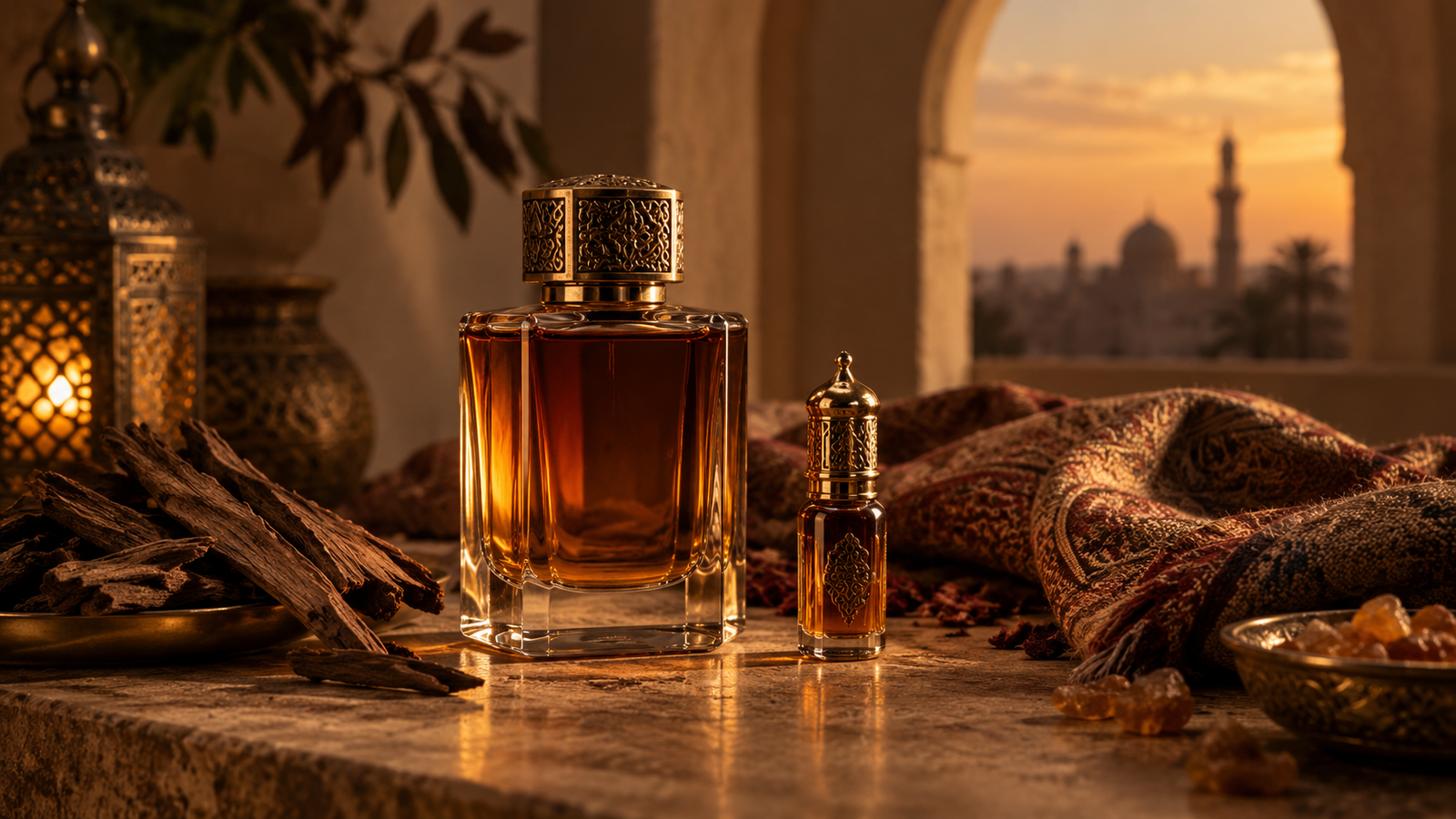
Scroll through fragrance videos on social media and you may notice something has changed.
Alongside the familiar designer names are bottles from brands such as Lattafa, Rasasi, Ajmal, Armaf, Ahmed Al Maghribi and Arabiyat. Reviewers talk about oud, amber, musk, vanilla, saffron and intensely sweet gourmand scents. Attars and concentrated perfume oils are being rediscovered by shoppers who previously bought only sprays.
And this isn't just a social-media illusion.
Amazon India has reported that Middle Eastern fragrance brands including Rasasi, Ahmed Al Maghribi, Arabiyat and Lattafa have grown nearly threefold year over year, with the retailer pointing to demand for long-lasting oud and attar-style fragrances as well as social-led discovery.
So why are Middle Eastern perfumes suddenly everywhere -- and are they actually worth buying?
Affiliate Disclosure: This article contains affiliate links. If you purchase through one of these links, we may earn a commission at no additional cost to you. As an Amazon Associate, we earn from qualifying purchases.
The Short Answer
Middle Eastern fragrances are attracting buyers because they combine several things today's fragrance shopper wants:
- distinctive scent profiles
- strong interest in oud, amber, musk and gourmand notes
- visually striking bottles and packaging
- options at multiple price levels
- concentrated perfume oils and attars as alternatives to sprays
- easy discovery through social media
- growing online availability in India
But the category is much broader than the viral bottles appearing in short videos.
Some fragrances are loud and sweet. Others are woody, smoky, floral, musky or surprisingly fresh.
And an Arabic-looking bottle does not automatically mean the fragrance is better, stronger or longer-lasting.
The trick is learning how to shop the category rather than simply buying whatever happens to be trending.
This Isn't Just Another Internet Micro-Trend
Social media has undoubtedly accelerated the movement.
In one snapshot of U.S. TikTok Shop fragrance sales reported by Glossy, Middle Eastern brand Lattafa generated about $4.9 million in monthly sales, while Armaf was also among the platform's stronger fragrance sellers.
But the trend extends beyond viral videos.
Lattafa says it now reaches fragrance enthusiasts in more than 120 countries, reflecting how far brands originating in the Gulf have expanded beyond their traditional markets.
India is becoming particularly important.
Ajmal, which has a long history in Middle Eastern perfumery, has announced aggressive retail expansion in India. Its CEO has described India as a strategic growth market and said ecommerce already accounts for roughly half of the company's India sales.
In other words, social media may be helping people discover these fragrances, but improved availability is helping turn curiosity into purchases.
Reason #1: They Smell Different From What Many Shoppers Are Used To
Walk through a conventional fragrance counter and you'll encounter plenty of fresh citrus, aquatic, floral and clean woody scents.
Middle Eastern perfumery expands that palette.
Common themes can include:
- oud
- amber
- musk
- rose
- saffron
- incense
- spices
- woods
- vanilla
- resins
- sweet gourmand accords
Not every Middle Eastern perfume uses these notes, of course.
But richer woody, ambery, musky and spicy styles have a particularly strong association with the region.
For someone whose fragrance collection consists mainly of fresh everyday scents, trying a warm oud-and-amber perfume can feel dramatically different.
That novelty is part of the appeal.
Reason #2: Oud Has Moved From Niche to Mainstream Curiosity
Few fragrance ingredients carry as much mystique as oud.
Oud -- or agarwood -- is associated with a deep woody fragrance character and has a long history in Middle Eastern scent culture.
What matters for shoppers is that “oud fragrance” covers an enormous spectrum.
One perfume may smell dark, smoky and resinous.
Another may combine an oud-style accord with rose.
Another might surround it with vanilla and amber, creating something much sweeter and more approachable.
So don't assume you'll dislike all oud perfumes because you smelled one challenging example.
Likewise, don't assume every product with “Oud” printed on the bottle will smell traditionally oud-heavy.
Always look at the complete scent profile.
Reason #3: Gourmand Fragrances Are Having a Moment
The rise of Middle Eastern fragrance also overlaps with another major perfume trend: gourmand scents.
Gourmand fragrances take inspiration from edible aromas -- think vanilla, caramel, coffee, chocolate, fruits, creamy desserts and spices.
Fragrance coverage in recent years has documented strong consumer interest in increasingly creative gourmand profiles.
This creates a natural overlap with some modern Middle Eastern launches.
Sweet amber, vanilla, dates, cinnamon, coffee, praline and dessert-like accords can produce fragrances that are immediately easy to describe on TikTok, Instagram or YouTube.
“Smells like vanilla and coffee” is much easier to communicate in a 20-second video than an abstract fragrance composition.
That makes gourmand perfumes unusually suited to social discovery.
Reason #4: The Bottles Are Made for Social Media
Fragrance is unusual because you cannot smell it through your phone.
Brands therefore need something else to catch your attention.
Packaging helps.
Many Middle Eastern fragrance brands use elaborate bottles, metallic finishes, heavy-looking caps, decorative boxes and presentation styles that stand out immediately in videos and photographs.
A dramatic bottle can stop someone scrolling.
Then the reviewer describes the scent.
Then comments ask where to buy it.
That doesn't tell you anything about whether the fragrance itself is good -- but it helps explain why the category spreads so effectively online.
The bottle becomes part of the content.
Reason #5: Buyers Feel They Can Explore Without Immediately Entering Luxury-Designer Pricing
India's fragrance market has historically had a significant gap between inexpensive mass-market fragrances and international luxury brands.
Ajmal's CEO recently described roughly ₹3,000–₹5,000 as an important opportunity within India's fragrance market, sitting between many lower-priced Indian products and designer perfumes costing ₹10,000 or more.
That middle ground matters.
A buyer may want something that feels more special than a deodorant or inexpensive everyday spray but may not want to spend designer-fragrance money.
Middle Eastern brands compete across a wide range of prices, giving shoppers another route into enthusiast-level fragrance collecting.
That does not mean every Middle Eastern perfume is cheap.
Some are decidedly premium or luxury products.
The more useful point is that buyers now have more choice between mass-market and traditional designer pricing.
Reason #6: Attars Offer a Completely Different Way to Wear Fragrance
The renewed attention around Middle Eastern fragrance has also introduced more shoppers to attar.
In modern retail, the word is commonly used for concentrated perfume oils, frequently sold without alcohol.
Ajmal, for example, sells attars as concentrated perfume oils and describes its range as alcohol-free.
Instead of spraying a mist across the neck or clothing, perfume oil is generally applied sparingly to the skin.
This changes the experience.
Sprays can create a broader scent cloud.
Oils often sit closer to the wearer and develop more intimately on the skin.
That makes attars particularly interesting for people who want:
- a concentrated fragrance format
- an alcohol-free option
- something compact for travel
- closer-to-the-skin fragrance
- traditional oud, musk, amber or floral profiles
However, don't assume every perfume oil is automatically stronger than every spray.
Performance depends on formulation, materials, application and individual skin.
Attar vs Eau de Parfum: What's the Difference?
The easiest distinction is the format.
Attar / concentrated perfume oil:
Usually oil-based and applied directly in small amounts.
Eau de parfum:
Typically an alcohol-based spray containing aromatic materials at a relatively
high fragrance concentration.
Neither format is inherently better.
Choose based on how you prefer to wear fragrance.
If you enjoy projecting fragrance around you, a spray may appeal more.
If you prefer controlled application and a more intimate scent experience, an oil can be very satisfying.
Many enthusiasts own both.
Reason #7: PerfumeTok Has Changed How People Shop for Fragrance
Fragrance used to be difficult to buy online.
How do you sell something a customer cannot smell?
Creators solved part of that problem by developing a new vocabulary.
Instead of simply listing notes, they describe fragrances as:
“warm and cosy.”
“dark and mysterious.”
“smells like a bakery.”
“good for date night.”
“clean and expensive.”
“sweet but smoky.”
These descriptions aren't technical perfumery, but they help viewers imagine the experience.
Social media has also popularised fragrance layering -- wearing multiple scented products together to create a customised result. The practice has become a recurring topic across PerfumeTok and wider beauty media.
Middle Eastern fragrances fit naturally into this culture because many have easily recognisable scent themes that enthusiasts enjoy discussing and combining.
Reason #8: India Already Has Familiarity With Attar Culture
For Indian buyers, perfume oils are not entirely new.
Attar has long been sold in India, and the country's fragrance traditions intersect with Middle Eastern perfumery through ingredients, trade, culture and shared appreciation for materials such as rose, sandalwood, musk-style notes and oud.
That gives the current trend an interesting character.
For some younger buyers, Middle Eastern fragrance feels like a new social-media discovery.
For others, concentrated perfume oils and attars are something their parents or grandparents already knew.
The format is old.
The discovery mechanism is new.
Are Middle Eastern Perfumes Always Strong and Long-Lasting?
No.
This is one of the biggest misconceptions surrounding the category.
Social videos frequently describe perfumes as “beast mode,” “nuclear” or capable of lasting all day.
Treat those descriptions cautiously.
Performance varies according to:
- formulation
- fragrance concentration
- ingredients
- skin chemistry
- temperature
- humidity
- how much you apply
- whether the fragrance is applied to skin or fabric
Even two people wearing the same perfume may perceive its longevity differently.
Don't buy a fragrance solely because someone online says it lasts 14 hours.
Think first about whether you actually like the scent.
A fragrance you dislike for 12 hours isn't better value than one you love for six.
Are They All Copies of Designer Perfumes?
No.
This deserves clarification because online fragrance discussions sometimes place the entire category under the “dupe” label.
Some Middle Eastern fragrances are compared with expensive designer or niche scents because they share similar ideas or scent profiles.
Others are original compositions with their own identity.
And established houses such as Ajmal and Rasasi have long histories that predate today's social-media dupe culture.
Evaluate individual fragrances rather than treating an entire region's perfume industry as one category of imitation products.
What Should You Look for Before Buying?
1. Start With Notes You Already Enjoy
If you normally like fresh citrus scents, don't begin with the darkest oud perfume you can find simply because it is viral.
Look for familiar territory.
If you like:
Vanilla: explore vanilla-amber or gourmand scents.
Rose: consider rose-and-oud combinations.
Fresh fragrances: look for citrus, aromatic or aquatic Middle Eastern perfumes.
Woody scents: explore sandalwood, cedar, amber and lighter oud compositions.
Sweet fragrances: look for vanilla, caramel, fruit, praline or warm-spice profiles.
Use the trend to explore -- not to ignore your own taste.
2. Check Whether It's a Spray or Perfume Oil
A 10 ml attar and a 100 ml eau de parfum are not directly comparable.
They are used differently.
Check the format before comparing bottle sizes and prices.
3. Read the Full Note Pyramid
Don't buy because the name contains “Oud,” “Amber” or “Musk.”
Look at the opening, middle and base notes.
The supporting notes often tell you much more about how wearable the fragrance may be.
4. Consider the Weather
India's climate matters.
Heavy amber, sweet vanilla and dense oud fragrances can feel very different on a hot afternoon than they do during a cool evening.
If you're buying a strong fragrance, think about when you plan to wear it.
Fresh or lighter compositions may be easier for daytime heat, while richer fragrances can work beautifully for evenings, celebrations and cooler weather.
5. Don't Overspray
Strong fragrances don't need to announce your arrival five minutes before you enter the room.
Begin conservatively.
You can always add another spray next time.
6. Buy From a Trustworthy Seller
Fast-growing categories attract counterfeits.
Lattafa itself warns customers about fake products and recommends purchasing through official or authorised channels; the brand also operates an authenticity-verification system for relevant products.
On marketplaces, check the seller carefully instead of choosing solely by the lowest price.
A suspiciously cheap bottle isn't a bargain if it isn't genuine.
Should You Blind-Buy a Viral Perfume?
Preferably not -- especially if it is expensive.
Fragrance is unusually personal.
A perfume that one reviewer calls “addictive” might smell overwhelmingly sweet to you.
A scent described as sophisticated oud may feel medicinal to someone unfamiliar with that style.
If possible:
- smell it in a store,
- buy a small sample or decant,
- try a discovery set, or
- start with a lower-cost fragrance that matches notes you already know you like.
Social media is excellent for discovering perfumes.
It is less reliable for telling you whether you will enjoy them.
Who Should Explore Middle Eastern Fragrances?
They are particularly worth exploring if you:
- are bored with conventional fresh fragrances
- enjoy amber, musk, oud, vanilla or spices
- want to try perfume oils or attars
- enjoy gourmand fragrances
- like unisex scents
- want more choices outside mainstream designer brands
- collect fragrances
- enjoy layering
- are searching for distinctive gifts
Who Should Shop More Carefully?
Take extra time before buying if you:
- strongly dislike sweet fragrances
- prefer extremely subtle scents
- have never tried oud
- are buying purely because a perfume is viral
- expect every Middle Eastern fragrance to outperform expensive designer perfumes
- are tempted by an unusually low marketplace price
There is tremendous variety in this category.
That's exactly why generalisations are dangerous.
Which Middle Eastern Fragrance Brands Are Worth Knowing?
Rather than treating this as a ranking, these are some useful names to recognise while researching the category:
Ajmal -- A long-established fragrance house with perfumes as well as traditional-style concentrated perfume oils and attars. It is expanding substantially in India.
Lattafa -- A UAE-based, family-run company that says its products now reach consumers in more than 120 countries. The brand has become particularly visible through online fragrance culture.
Rasasi -- Another established UAE fragrance house frequently seen in the Indian market.
Armaf -- Widely discussed online and particularly visible among shoppers exploring accessible modern fragrances.
Ahmed Al Maghribi and Arabiyat -- Both are among the Middle Eastern fragrance names Amazon India has identified as participating in the category's rapid recent growth.
The right choice depends on the actual fragrance -- not simply the logo on the bottle.
Are Middle Eastern Fragrances Worth the Hype?
Some are.
Some aren't.
And that's exactly the same answer you could give about French, American, Indian or Italian perfumes.
What's genuinely exciting is not that Middle Eastern fragrances have somehow discovered a secret formula for making every perfume better.
It's that shoppers now have access to a much wider fragrance vocabulary.
Oud.
Amber.
Musk.
Rose.
Incense.
Coffee.
Dates.
Vanilla.
Saffron.
Woods.
Rich perfume oils.
Bold modern gourmands.
Subtle traditional attars.
For someone who thought fragrance meant choosing between “fresh,” “sport” and a few designer bottles at the mall, this can feel like discovering an entirely new hobby.
Frequently Asked Questions
What is a Middle Eastern perfume?
The term generally refers to perfumes from fragrance houses based in countries such as the UAE, Saudi Arabia and other parts of the Middle East, or fragrances strongly influenced by regional perfumery traditions. There is no single Middle Eastern scent profile.
What is attar?
In today's retail fragrance market, attar commonly refers to concentrated perfume oil, frequently alcohol-free and applied in small amounts directly to the skin. Traditional attar-making traditions are broader and have a long history across South Asia and the Middle East.
Why are Middle Eastern perfumes becoming so popular?
Social-media discovery, growing ecommerce availability, interest in oud and gourmand scents, distinctive packaging and broader consumer experimentation are all contributing. Amazon India reports that several Middle Eastern fragrance brands on its platform have recently grown nearly threefold year over year.
Are Middle Eastern perfumes only for men?
No. Many fragrances and attars are marketed for women or as unisex scents, in addition to products specifically positioned for men.
Do Middle Eastern perfumes last longer?
Some perform very strongly, but origin alone does not determine longevity. Concentration, formulation, ingredients, application, climate and individual skin all affect performance.
What does oud smell like?
Oud can produce woody, resinous, smoky, leathery or earthy impressions depending on the material and composition. Oud-based perfumes can range from very traditional and intense to sweet, floral or modern.
Is attar better than perfume?
Neither is automatically better. Attar/perfume oil offers concentrated, controlled application, while alcohol-based sprays generally create a different type of scent diffusion. Personal preference should decide.
Are Middle Eastern fragrances good gifts?
They can be, especially when you know the recipient's fragrance preferences. If you're unsure, discovery sets, smaller bottles or broadly appealing scent profiles can be safer than an intense oud blind buy.
The Bottom Line
There really is a Middle Eastern fragrance boom happening -- and India is part of it.
Amazon's reported growth figures, expanding fragrance retail and the visibility of brands such as Lattafa, Ajmal, Rasasi and others all point to something larger than a temporary viral moment.
But social media should be the beginning of your search, not the end of it.
Don't buy a perfume because someone says it is “beast mode.”
Don't assume the fanciest bottle contains the best scent.
And don't assume every oud or attar will smell alike.
Instead, use the current trend as an excuse to explore a side of fragrance that many shoppers are only now discovering.
You may find that the most interesting thing about Middle Eastern perfumes isn't how powerful they are.
It's how much bigger they make the world of fragrance feel.